
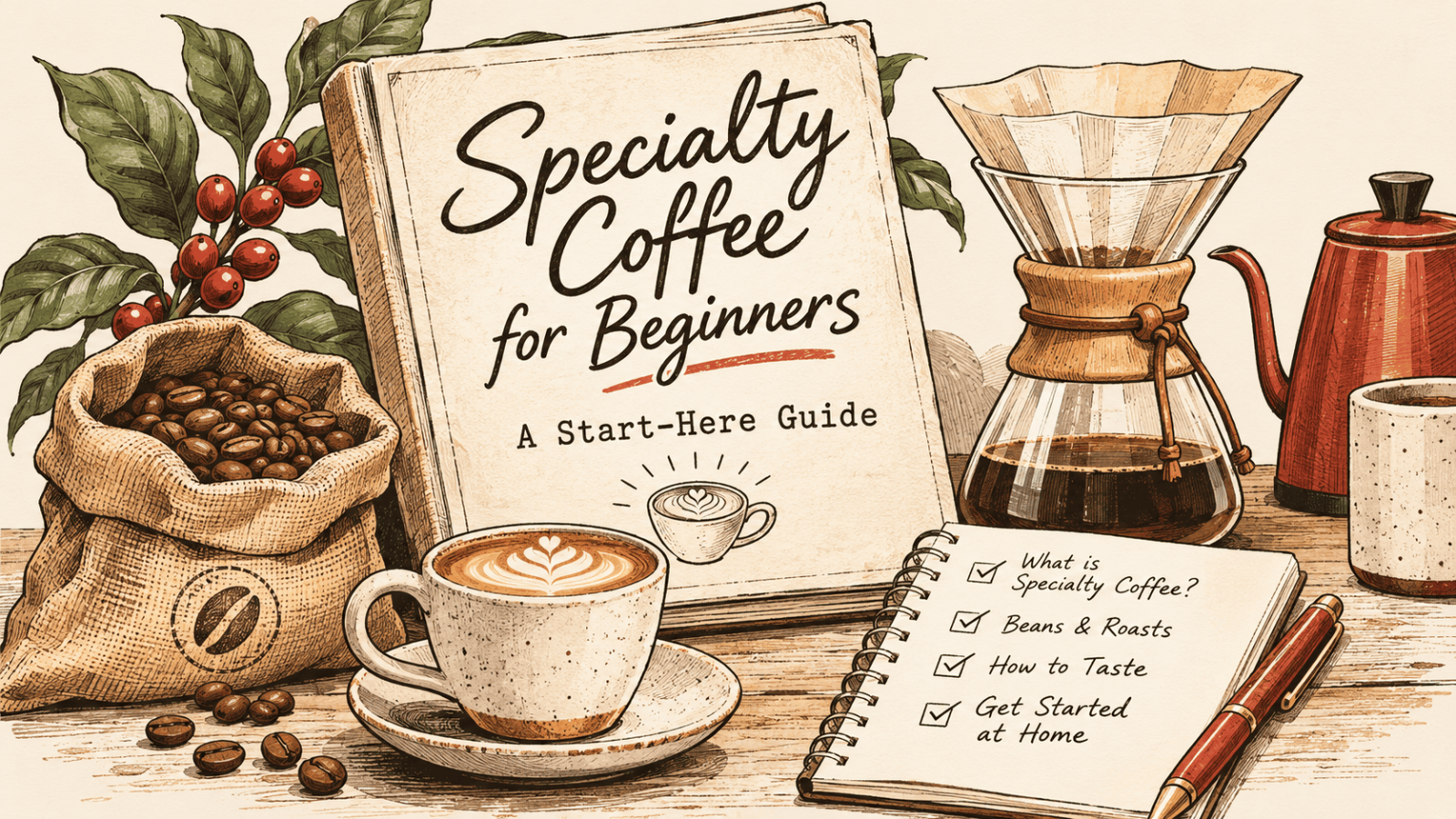
Specialty coffee simply means coffee beans grown with extra care, picked at peak ripeness, and scored 80 points or higher on a 100-point scale by certified tasters. If you want better coffee at home, starting with specialty beans is the easiest way to make a noticeable jump in flavor without buying complex equipment.
When I drank my first cup of specialty coffee, I was confused. It did not taste like the dark, bitter diner coffee I grew up with. It tasted bright, slightly fruity, and surprisingly sweet. I did not need to add milk or sugar to enjoy it. That single cup changed how I thought about coffee forever.
If you are just getting into specialty coffee, you do not need to memorize chemical compounds or buy a thousand-dollar grinder today. You just need to understand a few basics about beans, freshness, and brewing. This guide breaks down everything you need to know to take your first steps.
What Specialty Coffee Means in Plain Words
In the coffee world, the word "specialty" is not just marketing hype. It is a official quality classification defined by the Specialty Coffee Association (SCA).
Coffee professionals called Q Graders taste and grade green (unroasted) coffee beans. They look for defects in the beans and evaluate flavor, aroma, acidity, body, and balance.
- Commercial Coffee: Scores below 80 points. This is the coffee found in most supermarket tins, standard coffee pods, and fast-food chains.
- Specialty Coffee: Scores 80 points or higher out of 100. It represents less than ten percent of all coffee grown worldwide.
+-------------------------------------------------------------+
|                     100-Point Quality Scale                 |
|  0 ------------------------------------ 80 ---------------- 100
|      Commercial / Mass Market           |   Specialty Coffee|
+-------------------------------------------------------------+
Specialty coffee focuses on traceability. While commercial coffee blends beans from many farms to create a consistent flavor year after year, specialty coffee highlights where the bean was grown. You will often see the name of the specific country, region, or even individual farm printed on the bag.
Because coffee plants absorb nutrients from their surrounding environment, beans from different regions taste different. A coffee grown in Ethiopia might taste like fresh berries and jasmine flowers, while a coffee grown in Colombia might taste like chocolate, caramel, and orange zest.
If you are wondering what is specialty coffee in everyday terms, it is simply coffee treated like produce or fine wine rather than a manufactured commodity.
Beans and Roasts on One Page
When you pick up a bag of specialty coffee, the label gives you clues about how that coffee will taste in your mug. The two most important details on the bag are the bean variety and the roast level.
Arabica vs. Robusta
There are two main species of coffee plants grown for drinking:
- Arabica: Grown at higher elevations, Arabica beans make up almost all specialty coffee. They have delicate flavors, higher acidity, and natural sweetness.
- Robusta: Grown at lower elevations, Robusta plants are easier to grow and contain about twice the caffeine of Arabica. However, Robusta tends to taste harsh, woody, and bitter, so it is rarely used in specialty coffee except in small amounts for traditional Italian espresso blends.
Roast Levels
Roasting cooks the green coffee beans to bring out their soluble flavors. Darker roasts are cooked longer at higher temperatures. Lighter roasts are cooked for less time.
Here is a simple breakdown of how roast levels affect taste:
Light Roast: Light brown, matte surface (no oils)Floral, fruity, bright acidity, tea-likeLight and clean
Medium Roast: Medium brown, matte surfaceBalanced, milk chocolate, nuts, mild fruitSmooth and medium
Dark Roast: Dark brown to black, shiny surface (oily)Smoky, dark chocolate, roasty, low acidity, Heavy and full
When you choose a lighter roast, you taste more of the original flavor of the coffee bean and its soil. When you choose a dark roast, you taste more of the flavor created by the roasting process itself. Read our full guide on coffee roast levels explained to see which roast profile fits your taste buds best.
Keeping Beans Fresh
Coffee is an agricultural product, which means roasted coffee beans go stale over time. Freshness is one of the biggest secrets to brewing delicious coffee at home.
Once coffee is roasted, it starts releasing carbon dioxide gas - a process called degassing. Over the next few weeks, as oxygen interacts with the open structure of the roasted bean, the delicate oils and aromatics begin to break down.
The Freshness Rules of Thumb
- Roast Date: Always look for a bag with a printed "Roast Date" rather than a "Best By" date. Try to buy coffee that was roasted within the last one to three weeks.
- Peak Flavor Window: Most specialty coffees taste best between 7 and 21 days after roasting.
- Grinding: Whole bean coffee stays fresh much longer than pre-ground coffee. Once you grind coffee, air hits more surface area, and the volatile aromas disappear within minutes.
Basic Storage Rules
Keep your beans in a cool, dark, and dry place. Oxygen, light, heat, and moisture are the four main enemies of coffee freshness. Leave your coffee in its original foil bag with the one-way valve, or transfer it to an airtight canister stored in a kitchen pantry.
Avoid storing coffee in the refrigerator, as humidity and food odors can alter the flavor of the beans. To learn proper storage techniques and freeze extra beans safely, check out our guide on how to store coffee beans.
Learning to Taste
Tasting coffee like a pro does not require special genetics or a trained palate. It just requires paying attention while you sip.
When beginner coffee drinkers say they want to "learn to taste," they usually mean they want to identify specific flavor notes listed on the bag, like red apple, milk chocolate, or hazelnut. These flavors are not added artificially. They are natural aromatic compounds that remind our brain of foods we have tasted before.
         [ Siphon / Sip ]
                │
                ▼
  ┌──────────────────────────┐
  │   1. Sweetness           │ ──► Is it harsh or smooth?
  ├──────────────────────────┤
  │   2. Acidity             │ ──► Is it bright like citrus or soft?
  ├──────────────────────────┤
  │   3. Body (Texture)      │ ──► Does it feel like skim milk or cream?
  ├──────────────────────────┤
  │   4. Finish (Aftertaste) │ ──► Does the pleasant flavor linger?
  └──────────────────────────┘
Four Basic Things to Notice
When you sip your next cup, pause for a moment and ask yourself four questions:
- Sweetness: Is the cup harsh and sour, or does it have a pleasant, soft sweetness like caramel or ripe fruit?
- Acidity: Does the coffee trigger a crisp sensation on the sides of your tongue, similar to biting into a fresh green apple or drinking lemonade?
- Body: How does the coffee feel in your mouth? Is it light and clear like tea, or heavy and velvety like cream?
- Finish: Does the pleasant flavor linger in your mouth after you swallow, or does it leave an uncomfortable bitter coating?
To build your palate, try tasting two different coffees side-by-side. Comparing a light roast from Ethiopia next to a medium roast from Guatemala makes flavor differences much clearer than tasting one coffee on its own. For a simple step-by-step method to practice this at home, read our guide on how to taste coffee.
Where to Go Next in The Dial In
Learning specialty coffee is a journey best taken one step at a time. Here is how our blog is structured to help you keep building your skills:
1. Understand Coffee (You Are Here)
Learn how coffee grows, how roasters process the beans, and how to read specialty coffee labels with confidence.
2. Gear & Setup
Discover what tools actually matter for home brewing. We cover entry-level manual grinders, scales, kettle options, and budget-friendly setup guides.
3. Brew Guides
Simple, step-by-step recipes for popular home brewing methods including Pour Over (V60), French Press, AeroPress, and Cold Brew.
4. Flavor & Dialing In
Master the basics of extraction. Learn how to fix cups that taste too sour or too bitter by making small adjustments to your grind size or water temperature.
If you are eager to start improving your daily cup right away, head straight over to our starter guide on how to make better coffee at home.
A First Week of Coffee Homework
The best way to learn specialty coffee is by doing simple hands-on experiments. You do not need expensive gear to complete this one-week homework checklist.
Your 7-Day Checklist
Day 1: Buy Local
[ ] Visit a local specialty coffee shop and buy a bag of whole bean coffee with a clear "Roast Date" printed on it.

Day 2: Smelling the Coffee
[ ] Open the bag, smell the whole beans, and then smell the grounds right after grinding. Notice the difference in aroma.

Day 3: Measure by Weight
[ ] Use a digital kitchen scale to measure your coffee and water accurately instead of using scoops.

Day 4: Taste as It Cools
[ ] Take a sip of your coffee when it is scalding hot, then sip it again 5 minutes later as it cools down. Notice how flavors open up.

Day 5: The Side-by-Side Cup
[ ] Brew two small cups using different beans (or different roast levels) and compare them side-by-side.

Day 6: Focus on Acidity
[ ] Pay attention to the pleasant fruit-like acidity in a lighter roast cup versus a darker roast cup.

Day 7: Log Your Experience
[ ] Write down what you liked or disliked about your favorite cup of the week in a logbook or coffee journal app.
Good Enough to Start Numbers
If you are measuring your coffee, start with these simple, forgiving brewing targets:
- Coffee-to-Water Ratio: Use a 1:16 ratio as a baseline. That means 1 gram of coffee for every 16 grams (or milliliters) of water.
- Standard Single Cup: 15 grams of coffee to 240 grams (approx. 8 oz) of water.
- Water Temperature: Bring filtered tap water to a boil, then let it rest off the heat for 1 minute (around 200°F to 205°F / 93°C to 96°C).
- Brew Time: Aim for a total contact time of 2.5 to 3.5 minutes for most pour over and drip methods.
These numbers are meant as flexible starting points, not strict rules. Adjust them to match your personal taste!
Frequently Asked Questions
What is specialty coffee?
Specialty coffee refers to highest-grade coffee beans available, scoring 80 points or above on a standard 100-point scale evaluated by certified coffee tasters. It focuses on high-quality farming practices, distinct regional flavor profiles, precise roasting, and complete supply chain transparency.
Do I need expensive gear to start?
No, you do not need expensive equipment to enjoy specialty coffee at home. You can make an excellent cup of specialty coffee using a simple pour over cone, AeroPress, or French Press paired with a basic digital scale and fresh-ground beans from a local coffee shop.
What should I learn first?
Start by buying fresh whole bean coffee with a known roast date from a specialty roaster and learning basic coffee-to-water ratios using a digital scale. Master measuring your ingredients consistently before worrying about advanced brewing techniques or expensive gear upgrades.
Next Steps
Ready to take your next step? Read our beginner setup guide on how to make better coffee at home to start brewing cleaner, sweeter cups in your own kitchen.
As you try new beans and recipes this week, try writing down what worked and what didn't in a logbook or coffee journal app like Collected Cups. Keeping track of your brewing experiments helps you repeat your best cups and discover your unique coffee preferences fast!